A failed wheel bearing can prevent a vehicle from rolling safely and may change how it must be loaded onto a tow truck. Depending on the wheel’s condition, drivetrain, and available access, a light duty tow truck may need to use a flatbed, winch, skates, or wheel dollies to move the vehicle without relying on the damaged wheel.
Drivers in Queen Creek, AZ, may first notice a humming sound, grinding noise, vibration, uneven tire wear, or looseness near one wheel. Once the bearing becomes severely damaged, continuing to drive can increase the risk of damage to the hub, brake components, axle, or wheel assembly.
What Does a Wheel Bearing Do?
A wheel bearing is a set of metal components that allows the wheel to rotate with limited friction while supporting the weight of the vehicle. It sits inside or near the wheel hub and must tolerate constant movement, vehicle weight, road impacts, and heat.
When the bearing is in good condition, the wheel should turn smoothly. As it wears, the wheel may develop excessive movement or resistance. A severely damaged bearing may begin to seize, making the wheel difficult or impossible to rotate.
This matters during towing because loading often requires the vehicle to roll at least a short distance. If one wheel is locked or unstable, the tow operator may need another method to position the vehicle.
What Are the Signs of a Failing Wheel Bearing?
Wheel-bearing problems often begin gradually. A driver may hear a low humming or growling noise that changes with vehicle speed. The sound may become louder while turning because the weight of the vehicle shifts from one side to the other.
Other possible warning signs include:
- Grinding or scraping near one wheel
- Vibration through the steering wheel
- Uneven or unusual tire wear
- A loose or unstable wheel
- Pulling to one side
- ABS warning lights
- Heat near the wheel or hub
These symptoms can also be connected to other steering, suspension, tire, or brake problems. A repair facility should inspect the vehicle to identify the actual cause.
If the noise becomes severe or the wheel feels unstable, the safer decision may be to stop driving and arrange towing.
Can a Vehicle With a Failed Wheel Bearing Still Roll?
Sometimes, but that does not mean it should be driven. A worn bearing may still allow the wheel to rotate even when internal damage is already developing.
In more serious cases, the wheel may bind, wobble, or lock. The vehicle may also sit at an unusual angle if the hub assembly has shifted or partially failed.
The tow operator should be told whether the vehicle can roll and steer. If the driver notices that one wheel is tilted, loose, or difficult to move, that information can help determine how the towing service should approach the pickup.
Drivers should not attempt to push the vehicle if the wheel appears unstable. Additional movement may worsen the damage or cause the wheel assembly to shift further.
How Can a Light Duty Tow Truck Load the Vehicle?
Most passenger cars, SUVs, minivans, and pickup trucks with wheel-bearing problems can be handled by light-duty towing equipment. A flatbed is often useful because the entire vehicle can be lifted off the road during transport.
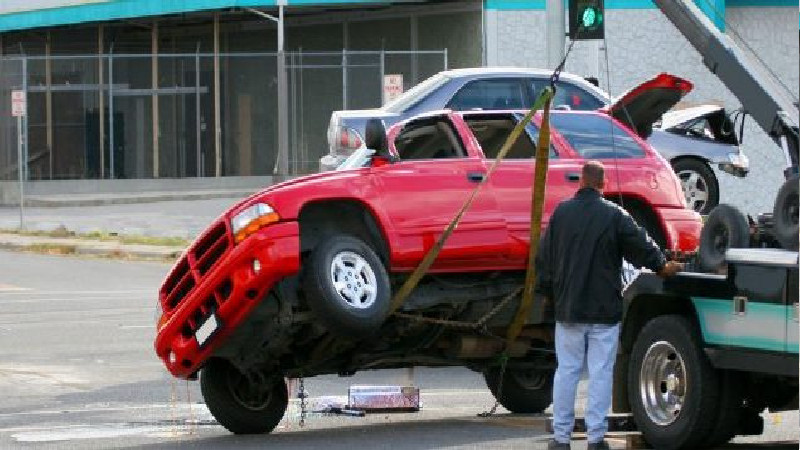
If the damaged wheel cannot rotate, the operator may use a winch to pull the vehicle onto the flatbed. Wheel skates or dollies can be placed beneath the tire to reduce resistance and allow the vehicle to move without forcing the failed bearing to turn.
A wheel-lift truck may also be appropriate in some situations, depending on which axle is damaged, the vehicle’s drivetrain, and the condition of the other wheels.
The final setup is based on the vehicle, not simply the mechanical problem. Two cars with similar bearing failures may require different loading methods because one is front-wheel drive while the other is all-wheel drive.
Does the Vehicle’s Drivetrain Matter?
Yes. The drivetrain determines which wheels are connected to the transmission and how they should be positioned during transport.
Front-wheel-drive vehicles often have bearings and driveline components concentrated at the front wheels. Rear-wheel-drive vehicles involve a different axle arrangement. All-wheel-drive and four-wheel-drive vehicles may require all four wheels to remain off the road to limit stress on the drivetrain.
The tow operator may ask for the year, make, model, and drivetrain before arriving. This helps them evaluate whether a flatbed, wheel lift, or dollies may be needed.
Although heavy duty towing is important for semis, buses, large commercial trucks, and other high-weight vehicles, most ordinary cars with failed wheel bearings require a properly equipped light duty tow truck.
What Should Drivers Tell the Tow Operator?
Clear details help the operator prepare for the vehicle’s condition. Drivers should explain where the noise is coming from, whether the wheel can turn, and whether the vehicle has been driven since the problem became severe.
They should also mention:
- Visible wheel movement or tilt
- Flat or damaged tires
- Grinding or scraping sounds
- Steering problems
- Collision damage
- Limited access around the vehicle
- Whether the parking brake is engaged
- Whether the transmission can shift into neutral
Photos can be useful when the wheel appears out of position or the car is parked in a narrow driveway, garage, or crowded lot.
Should the Vehicle Be Driven to a Repair Shop?
A mild noise does not always mean immediate bearing failure, but driving becomes increasingly risky when the sound is loud, the wheel vibrates, or steering control changes.
A bearing that overheats or breaks apart may damage nearby components. In severe cases, the wheel can become difficult to control or may separate from its normal position.
When there is uncertainty, towing the vehicle allows it to reach a repair facility without placing additional road load on the damaged wheel. Evan’s Towing serves Queen Creek and nearby areas, and drivers can contact their towing service to explain the vehicle’s symptoms, location, and wheel condition before transport is arranged.