Shoulder pain can make simple activities—reaching into a cabinet, fastening a seat belt, sleeping on one side, or lifting an object—unexpectedly difficult. One possible cause is calcific shoulder tendinopathy, a condition in which calcium deposits develop within a rotator cuff tendon.
The deposits do not always cause symptoms. When the surrounding tendon or bursa becomes irritated, however, pain can become intense and movement may be limited. For people in San Diego, CA, identifying the source of persistent shoulder pain is an important first step.
What Is Calcific Shoulder Tendinopathy?
The rotator cuff is a group of muscles and tendons that helps stabilize the shoulder and move the arm. Calcific tendinopathy commonly affects one of these tendons near the top of the shoulder.
The exact reason calcium deposits form is not always clear. Some remain quiet, while others trigger inflammation and significant discomfort as the body attempts to break them down.
Symptoms may include pain at the front or side of the shoulder, difficulty raising the arm, stiffness, weakness, and interrupted sleep. Because these symptoms can resemble bursitis, a rotator cuff strain, or frozen shoulder, an examination is needed to clarify the cause.
Why Does the Diagnosis Matter?
Shoulder pain is a symptom rather than a single condition. Arthritis, instability, tendon irritation, nerve problems, rotator cuff tears, and referred pain from the neck can produce similar complaints.
A clinician may evaluate motion, strength, tender areas, and symptom-provoking activities. X-rays can often reveal calcium deposits, while ultrasound may provide additional detail.
This distinction matters because shockwave therapy for shoulder pain is not suitable for every diagnosis. A treatment aimed at calcific tendon tissue will not address every tear, fracture, nerve problem, or source of referred pain.
How Does Shockwave Therapy Work?
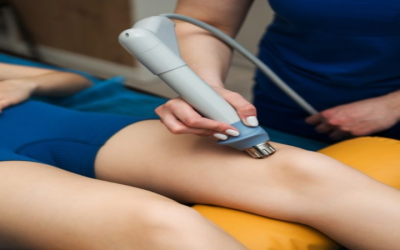
Shockwave therapy is a noninvasive treatment that delivers controlled acoustic energy through an applicator placed against the skin. Despite its name, it does not send an electrical shock through the shoulder.
The mechanical pulses are directed toward the affected tissue. In calcific shoulder tendinopathy, treatment may be used to influence the deposit, stimulate a local biological response, and improve pain and function over time. Devices, energy levels, and treatment protocols vary.
Herfindahl Chiropractic provides an overview of chiropractic shockwave therapy and how they determine whether acoustic-wave treatment may fit within an individualized conservative care plan.
What Does Research Suggest?
Research indicates that extracorporeal shockwave therapy may help some people with calcific rotator cuff tendinopathy, especially when symptoms continue despite initial conservative care. Studies have reported possible improvements in pain, shoulder function, and calcium-deposit resorption.
The evidence is not uniform, however. Results can differ according to the treatment type and energy, deposit characteristics, comparison treatment, and follow-up period. Some reviews have found that ultrasound-guided lavage may provide greater pain reduction in certain cases.
Shockwave chiropractic care should therefore be viewed as one possible treatment option rather than a guaranteed solution. Individual assessment and realistic expectations remain essential.
What May Happen During a Session?
A provider first identifies the affected area. Gel is typically applied to help transmit the acoustic waves, and a handheld device delivers repeated pulses to the shoulder.
Patients may feel tapping, pressure, or temporary discomfort. Mild soreness or tenderness may occur afterward. Session frequency should be based on the diagnosis, response, and provider’s judgment.
Is Rehabilitation Still Important?
Shockwave therapy does not replace the need to restore shoulder movement and capacity. Rehabilitation may include exercises for rotator cuff strength, shoulder-blade control, mobility, and gradual tendon loading.
Daily activity also matters. Repeated overhead work, sudden increases in training, or returning too quickly to painful movement may continue to irritate the area. The goal is often to reduce aggravating loads while maintaining comfortable motion.
For active San Diego residents, a gradual return to swimming, surfing, tennis, golf, or gym training may be more sustainable than immediately resuming full intensity when pain begins to improve.
When Should Shoulder Pain Be Evaluated?
Shoulder pain should be assessed when it persists, repeatedly interrupts sleep, causes notable weakness, or significantly limits arm movement. Prompt medical attention is appropriate after a major fall or collision, if the shoulder appears deformed, or if the arm suddenly cannot be lifted.
Chest pressure, breathing difficulty, sweating, or pain spreading to the jaw or left arm may signal a medical emergency rather than a shoulder tendon problem.
Considering Shockwave Therapy as Part of a Broader Plan
Shockwave therapy may be a conservative option for selected cases of calcific shoulder tendinopathy, but its suitability depends on an accurate diagnosis. The deposit, symptom duration, previous care, overall health, and functional goals should all be considered.
For people in San Diego with persistent shoulder pain, a thorough evaluation can determine whether symptoms come from calcific tendon tissue or another condition. Identifying the likely source helps guide care toward the actual problem instead of treating every painful shoulder the same way.