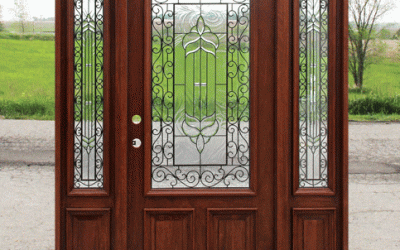
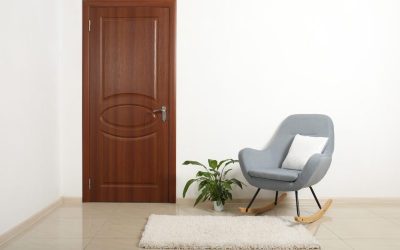
Interior doors do not always need to match the baseboards and wall trim exactly. They should coordinate through color, wood tone, proportion, or architectural style so the room feels intentional rather than overly uniform or visually disconnected.
For Scottsdale homeowners, the right approach depends on the home’s architecture, the amount of natural wood already present, and whether the doors are meant to blend into the walls or serve as noticeable design features.
When Does Matching Create the Strongest Result?
Matching interior doors with baseboards and wall trim can create a clean, consistent appearance. This approach works especially well when the goal is to keep attention on furniture, flooring, art, or other architectural features.
A matched treatment may suit:
- Traditional interiors with consistent millwork
- Compact rooms that benefit from visual continuity
- Hallways with several doors in close proximity
- Interiors where trim creates a unified framework
- Spaces with detailed flooring or cabinetry
When the door, casing, and baseboards share the same general appearance, the opening reads as one architectural unit. This can make the walls feel more organized and reduce unnecessary visual changes.
Traditional interior doors often work well with coordinated trim because repeated panel shapes, moldings, and proportions reinforce the home’s established character.
When Should Wooden Doors Contrast With the Trim?
Contrast can make a wooden door feel more substantial and give the room a stronger focal point. A natural wood door placed within lighter trim can emphasize grain, texture, and handcrafted construction.
This approach may be effective when:
- The door has distinctive natural grain
- The opening marks an important room
- The home includes exposed beams or wood cabinetry
- The walls and trim are visually restrained
- The design needs warmth or depth
A contrasting door should still relate to something else in the room. It might share undertones with the flooring, connect with ceiling beams, or repeat the wood character of nearby furniture.
Without that relationship, the contrast may appear isolated. The goal is not simply to make the door stand out, but to make it part of a deliberate material palette.
Should All Interior Doors Follow the Same Rule?
Not every door needs the same treatment. A home can use a hierarchy in which prominent doors receive more visual emphasis while secondary doors blend more quietly into the architecture.
For example, custom interior doors leading to a dining room, study, or primary suite may feature natural wood and more detailed proportions. Closet, utility, and secondary bedroom doors may coordinate more closely with the trim.
This creates variation without making the home feel inconsistent. Repeating panel proportions, hardware shapes, or door heights can maintain continuity even when the materials differ.
The strongest whole-home plan usually establishes a primary design language and then adjusts it according to the importance and function of each opening.
How Should Door Casing Affect the Decision?
Door casing forms the visual transition between the door and the wall. It can either connect the door to the room or create a deliberate frame around it.
When the casing matches the baseboards, the trim system feels continuous. A contrasting wood door inside that casing can appear carefully framed, similar to artwork within a border.
If the door and casing share the same wood, the opening may feel larger and more substantial. This can work well in rooms where the door is intended to become an architectural feature.
The casing width also matters. Narrow trim creates a more restrained transition, while wider or more detailed casing adds visual weight. The door should be proportionate to that frame so neither element overwhelms the other.
How Do Wood Undertones Influence Coordination?
Color alone does not determine whether materials work together. Undertones are often more important.
Wood may have warm, cool, red, golden, brown, or neutral characteristics. A door and nearby flooring can differ in darkness but still coordinate when their undertones are compatible.
Homeowners should compare:
- Warm versus cool tones
- Grain scale
- Natural color variation
- Light, medium, or dark value
- The appearance under daylight
- The appearance under interior lighting
A nearly matched combination can sometimes look less intentional than a clear contrast. If the door and trim are similar but noticeably different, the result may appear accidental. Selecting either a more coordinated relationship or a more definite contrast usually creates a stronger design.
How Does Architectural Style Affect the Choice?
The home’s architectural style should guide the relationship between doors and trim.
Traditional homes often use repeated profiles and coordinated millwork. Interior wood doors may share panel proportions and details with the casing, baseboards, and crown elements.
Contemporary homes may use simpler trim or minimal casing. A natural wood door can become the primary material feature against clean walls and understated baseboards.
Spanish-style and Southwestern homes may support substantial wooden interior doors that relate to beams, tile, masonry, and handcrafted architectural details. In these settings, exact matching may be less important than maintaining a compatible level of warmth and visual weight.
Transitional homes can combine classic proportions with simpler door surfaces, creating a balance between traditional structure and modern restraint.
Should Doors Match the Flooring Instead of the Trim?
The flooring often has more visual influence than the trim because it covers a much larger area. However, interior doors do not need to match it exactly.
A door can coordinate with flooring through shared undertones, grain character, or contrast. Darker wood doors may provide definition above a lighter floor, while lighter doors can soften a room with deep-toned flooring.
Matching too many wood surfaces can make a room feel heavy. If the flooring, cabinetry, beams, and doors all have strong grain and similar tones, the design may lack visual separation.
In that situation, doors that coordinate with the trim rather than the floor may create better balance. The decision should consider all visible materials together.
How Can Hallways Remain Visually Consistent?
Hallways often contain several doors within a limited area, making inconsistency especially noticeable. Repeating door heights, panel layouts, hardware, and trim profiles can create rhythm from one opening to the next.
The doors themselves may still vary according to function. A glass-panel office door can relate to solid bedroom doors through shared proportions or wood character.
A coordinated set of wooden interior doors can help establish continuity without requiring every opening to be identical. Anasazi Architectural Door offers interior styles that can be adapted to different rooms while preserving a consistent architectural language.
What Should Homeowners Review Before Deciding?
Before finalizing interior door designs, homeowners should stand in hallways and adjoining rooms to see which doors, baseboards, and trim elements are visible at the same time.
They should review:
- The home’s architectural style
- Existing wood undertones
- Flooring and cabinetry
- Trim width and detail
- Door panel proportions
- The importance of each opening
- Natural and artificial lighting
- Whether the door should blend in or stand out
Samples should be viewed in the actual space whenever possible. Light can change the perceived relationship between wood, walls, and trim throughout the day.
There is no rule requiring every interior door to match the baseboards and wall trim. A successful design may rely on close coordination, intentional contrast, or a combination of both. The strongest result is one in which each door supports the room while remaining connected to the home’s broader architectural character.