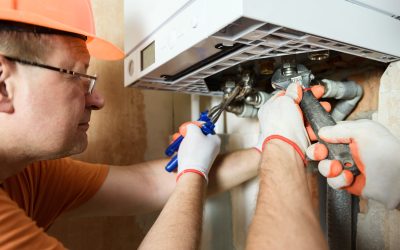
A tankless water heater may fail to start at very low flow because the unit needs a minimum amount of water movement before its flow sensor activates the heating process. If a faucet or fixture does not draw enough water, the system may remain off even though hot water has been requested.
This behavior does not always mean the unit is broken. In many cases, the issue involves fixture flow, a restricted inlet, the flow sensor, system settings, or the way water is being mixed at the fixture.
Why Does a Tankless Water Heater Need Minimum Flow?
Unlike a traditional tank-style heater that stores hot water, a tankless system heats water as it moves through the unit.
When a hot-water fixture is opened, a sensor detects water flow. Once that flow reaches the activation level required by the specific model, the burner or heating elements begin operating.
If the flow remains below that level, the heater may not activate. Minimum flow requirements vary by manufacturer and model, so homeowners should refer to the equipment specifications rather than assuming every tankless system behaves the same way.
Can a Low-Flow Faucet Prevent the Heater From Starting?
Yes. Water-saving faucets, partially opened taps, and certain low-flow fixtures may sometimes create less demand than the heater needs to activate.
A homeowner may notice that hot water works normally in the shower but not when a bathroom faucet is opened only slightly. The difference may be the amount of water moving through the system.
This can also occur when someone tries to reduce water use by barely opening the hot tap. In some systems, increasing the hot-water flow slightly may allow the heater to recognize the demand.
However, homeowners should not permanently increase water use just to make the heater function. Repeated activation problems should be evaluated to determine whether another condition is contributing.
Can a Clogged Inlet Filter Reduce Water Flow?
Many tankless systems have an inlet screen or filter that helps prevent debris from entering internal components.
Over time, sediment or debris can restrict this filter. When water flow is reduced enough, the unit may struggle to detect demand or may operate inconsistently.
A restricted filter can sometimes affect more than one fixture, especially when hot-water performance has gradually changed throughout the home.
Maintenance requirements differ between systems. Homeowners should follow manufacturer instructions and avoid opening internal components unless they are qualified to do so.
What Role Does the Flow Sensor Play?
The flow sensor tells the tankless water heater that hot water is being requested.
If the sensor becomes dirty, worn, or unable to detect low flow accurately, the heater may fail to start even when a fixture is open. The unit may work at higher demand but remain inactive when only a small amount of hot water is requested.
This pattern can make the problem seem fixture-specific when the actual issue is inside the heater.
A plumber familiar with a residential tankless hot water heater can evaluate whether the problem involves water flow, the heater, or another part of the plumbing system.
Can Mixing Too Much Cold Water Cause the Heater to Shut Off?
Yes. The way hot and cold water are mixed at a fixture can affect the amount of hot water passing through the tankless unit.
For example, a person may open the hot tap and then add a large amount of cold water to lower the temperature. This reduces the hot-water flow through the heater.
If the hot side drops below the unit’s operating threshold, the heater may shut off. The result can be an unexpected burst of cold water.
This does not necessarily mean the faucet itself is defective. It may indicate that the heater’s temperature setting, fixture flow, and user demand are not working well together.
Why Does the Problem Happen at One Fixture but Not Another?
Different fixtures can have different flow rates.
A shower may draw enough hot water to activate a home tankless water heater consistently, while a low-flow sink faucet may not. Aerators, valves, cartridges, and fixture restrictions can all influence how much water moves through the hot-water line.
If only one fixture causes the problem, the fixture should be considered as part of the diagnosis.
If several fixtures are affected, the issue may be closer to the heater, its inlet supply, or the home’s broader hot-water system.
Can Plumbing Restrictions Affect Tankless Activation?
Yes. Restrictions elsewhere in the plumbing can reduce the amount of water reaching or leaving the heater.
Partially closed valves, clogged screens, mineral accumulation, or restricted fixture components can all change flow.
The cause should be identified before replacing the tankless unit. A heater that appears unreliable at low demand may actually be responding normally to inadequate water movement.
This is why troubleshooting should consider both the appliance and the surrounding plumbing.
Should the Temperature Setting Be Checked?
The heater’s temperature setting can influence how homeowners mix water at fixtures.
If the unit is set significantly hotter than needed, users may compensate by adding more cold water. That can reduce hot-water flow through the heater and contribute to low-flow shutdowns.
Temperature adjustments should follow the manufacturer’s instructions. Homeowners should avoid removing covers, changing gas settings, or altering internal controls without proper training.
A professional evaluation can determine whether settings, flow conditions, or equipment performance are contributing to the problem.
When Should a Tankless Water Heater Be Evaluated?
An occasional low-flow issue may be related to how a fixture is being used. Repeated failure to activate, however, deserves closer attention.
Homeowners should consider service when the heater frequently fails at multiple fixtures, shuts off unexpectedly, displays error codes, or behaves differently than it did previously.
A professional can compare fixture flow, inspect accessible components, and determine whether the issue involves the heater or residential plumbing around it.
Address Low-Flow Tankless Problems in Sun City, AZ
A tankless water heater that fails to start at low flow may be responding to fixture demand, a restricted filter, a flow-sensor issue, plumbing restrictions, or system settings. The key is identifying which condition is actually limiting activation.
Homeowners in Sun City, AZ, who experience repeated low-flow hot-water problems should have the system evaluated before assuming the entire heater needs replacement.